
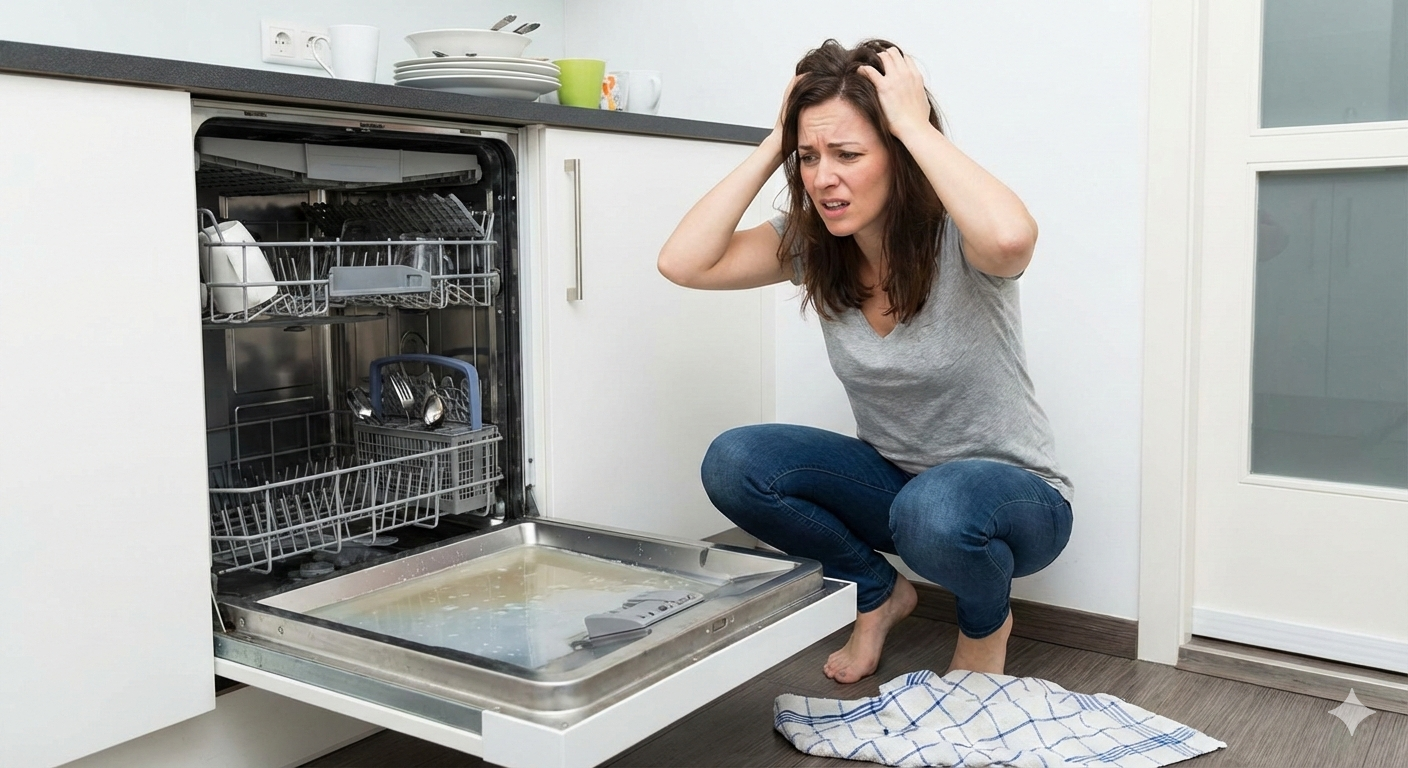
A dishwasher that won't drain usually has a clogged filter, kinked drain hose, garbage disposal issue, blocked air gap, or failing pump. This guide walks through diagnosing and fixing each cause yourself, saving time and money on repairs most homeowners can handle.
Dishwasher Not Draining? 5 Common Causes and DIY Fixes
TL;DR
A dishwasher that won't drain is usually caused by a clogged filter, blocked drain hose, faulty drain pump, garbage disposal connection issues, or an obstructed air gap. Most of these problems are fixable without a plumber-you'll need about 30 minutes and basic tools. Start by cleaning the filter and checking the drain hose for kinks before moving to more complex repairs.
The Short Answer: Why Won't My Dishwasher Drain?
Standing water at the bottom of your dishwasher almost always points to a blockage somewhere in the drainage system. The most common culprit is a dirty filter clogged with food debris-something you can clean in under five minutes. If that's not the issue, you're likely dealing with a kinked drain hose, a jammed drain pump, or a blocked connection to your garbage disposal.
The good news is that four out of five drainage problems can be solved with tools you already own. Before calling a repair technician, work through the causes below in order. You'll either fix the problem yourself or arrive at a clear diagnosis that helps you communicate with a professional.
How Your Dishwasher Drains (And Why It Matters)
Understanding your dishwasher's drainage system helps you troubleshoot more effectively. When a wash cycle ends, the drain pump activates and pushes dirty water through a drain hose. This hose typically connects to your kitchen sink's plumbing-either directly to the garbage disposal, through an air gap mounted on the countertop, or via a high loop under the sink.
Any obstruction along this path causes water to back up into the dishwasher. Food particles, grease buildup, and foreign objects are the usual suspects. Occasionally, the pump itself fails or an electrical issue prevents the drainage cycle from starting. Knowing where water travels helps you pinpoint where it's getting stuck.
Before you start troubleshooting, run a short rinse cycle and listen carefully. A humming sound suggests the pump is trying to work but something is blocking it. Complete silence during the drain phase points to an electrical or pump motor failure. Gurgling typically indicates an air gap or drain line problem.
Cause 1: Clogged Dishwasher Filter
The filter catches food particles during the wash cycle to prevent them from recirculating onto your dishes. When it gets clogged, water can't pass through efficiently, and drainage slows or stops completely. This is the most common cause of standing water and the easiest to fix.
How to Clean Your Dishwasher Filter
Locate the filter assembly at the bottom of your dishwasher's tub, usually beneath the lower spray arm. Most modern dishwashers have a cylindrical filter that twists counterclockwise to remove. Pull it straight up once unlocked. Some models have a secondary flat filter underneath-remove this as well.
Rinse both filter components under warm running water. For stubborn buildup, use a soft brush (an old toothbrush works well) and a drop of dish soap. Avoid abrasive scrubbers that can damage the mesh. Hold the filter up to the light-you should see through the mesh clearly when it's clean.
Reinstall the filters by reversing the removal process. Make sure the cylindrical filter locks back into place with a clockwise twist. Run a short cycle to confirm proper drainage.
Prevention Tip
Clean your filter every two to four weeks depending on usage. Scraping dishes before loading-you don't need to rinse them-dramatically reduces filter buildup and keeps your dishwasher draining properly.
Cause 2: Kinked or Clogged Drain Hose
The drain hose carries water from your dishwasher to the sink drain or garbage disposal. If this hose is kinked, crushed, or clogged with debris, water has nowhere to go. Drain hose problems are especially common after a recent kitchen remodel or if items stored under the sink have shifted.
How to Inspect and Clear the Drain Hose
Start by pulling your dishwasher out from under the counter-most units slide forward after removing a few mounting screws from the top bracket. Disconnect power at the breaker or unplug the unit before proceeding.
Locate the drain hose running from the pump housing at the bottom of the dishwasher to the connection under your sink. Check the entire length for kinks, sharp bends, or compression from storage items. Straighten any problem areas and ensure the hose has a gentle curve without pinch points.
If the hose looks clear, disconnect it from both ends (have towels ready for residual water) and inspect the interior. Flush it with water from a garden hose or use a long brush to clear any blockages. Grease and food debris often accumulate near the connection points.
When to Replace the Hose
Drain hoses become brittle over time, especially in warm environments. If yours shows cracks, feels stiff, or has areas that won't stay straight, replacement is inexpensive and straightforward. Universal drain hoses cost around fifteen dollars and fit most models.
Cause 3: Garbage Disposal Connection Issues
If your dishwasher drains through the garbage disposal, problems with the disposal directly affect dishwasher drainage. Two issues commonly cause backups: a clogged disposal and a forgotten knockout plug on new installations.
Clearing the Garbage Disposal
Run your garbage disposal with plenty of cold water for thirty seconds, even if it sounds clear. Built-up residue inside the disposal can block the dishwasher inlet port without affecting the disposal's normal operation. If the disposal is genuinely clogged, clear it before troubleshooting further.
A helpful trick: fill the sink with two to three inches of water, then run the disposal while the water drains. This flushes the chamber and the drain line simultaneously. Repeat if needed.
Checking the Knockout Plug
New garbage disposals ship with a plastic knockout plug blocking the dishwasher inlet port. If the installer forgot to remove this plug, the dishwasher drain hose connects to a sealed opening-water has nowhere to go.
To check, disconnect the drain hose from the disposal's inlet port (the smaller port on the side) and shine a flashlight inside. You should see an open passage into the disposal chamber. If you see plastic blocking the opening, use a hammer and screwdriver to knock the plug inward, then retrieve the plastic piece from inside the disposal before running it.
Cause 4: Blocked Air Gap or High Loop
An air gap is a small cylindrical fixture mounted on your countertop or sink, usually near the faucet. It prevents dirty water from the sink drain from siphoning back into your dishwasher. Not all installations have an air gap-some use a "high loop" instead, where the drain hose is secured at a high point under the counter.
Cleaning the Air Gap
If water spurts from the air gap during the dishwasher's drain cycle, the air gap itself is blocked. Remove the decorative cap and the inner protective cap beneath it. Clean out any debris with your fingers or tweezers. You'll often find a surprising amount of gunk accumulated inside.
While the caps are off, check the hose running from the air gap to the garbage disposal. This short section clogs frequently. Disconnect it and clear any obstructions, or snake a thin brush through from the air gap opening.
Checking the High Loop
If your installation uses a high loop instead of an air gap, verify that the drain hose is secured at a point higher than the dishwasher's connection to the sink drain. The apex of the loop should be at least 32 inches from the floor. A sagging or improperly installed loop allows backflow and can prevent proper drainage. Secure the hose to the underside of the counter with a hose clamp or bracket.
Cause 5: Faulty Drain Pump or Motor
When you've ruled out blockages and the dishwasher still won't drain, the drain pump itself may be the problem. Pumps fail when debris damages the impeller, when seals wear out, or when the motor burns out. This repair is more involved but still manageable for confident DIYers.
Diagnosing a Bad Drain Pump
With the dishwasher empty and disconnected from power, access the pump by removing the lower panel and locating the pump housing at the bottom of the unit. Check for obvious damage, debris caught in the impeller, or signs of leakage around the seals.
Many pumps are accessible from inside the tub by removing the filter and the protective cover beneath it. Reach in and try to spin the impeller by hand-it should rotate freely. A stuck or grinding impeller indicates debris or mechanical failure. If the impeller spins freely but the pump doesn't run during the drain cycle, the motor has likely failed.
Replacing the Drain Pump
Replacement pumps cost between fifty and one hundred fifty dollars depending on your dishwasher brand. The job involves disconnecting electrical connectors and hoses, removing mounting hardware, and installing the new pump in reverse order. Search for your model number plus "drain pump replacement" to find detailed video guides specific to your machine.
If you're uncomfortable working with electrical components or the repair requires significant disassembly, this is a reasonable point to call a professional. A technician can confirm the diagnosis and complete the repair efficiently.
When to Call a Professional
While most dishwasher drainage issues are DIY-friendly, certain situations warrant professional help. Call a technician if you've worked through all five causes without finding the problem, if you smell burning or see scorch marks near electrical components, or if your dishwasher is still under warranty and self-repair might void coverage.
Persistent drainage issues combined with other symptoms-unusual noises, leaks from the base, or error codes on the display-can indicate control board problems or multiple failing components. A professional diagnosis saves time when the root cause isn't obvious.
That said, don't jump straight to calling for service. A thorough twenty-minute inspection covers ninety percent of drainage failures. The repair technician will check these same things first-you might as well try before paying for a service call.
Key Takeaways
-
Start with the filter. A clogged filter causes most drainage problems and takes five minutes to clean. Make this your first troubleshooting step every time.
-
Inspect the drain hose for kinks and clogs. Check the entire length from the dishwasher to the sink connection. Items shifting under the sink commonly crush or kink the hose.
-
Don't overlook the garbage disposal. Run your disposal to clear any buildup, and verify the knockout plug was removed if the disposal is relatively new.
-
Clean your air gap regularly. If you have one, debris accumulation here is a frequent and overlooked cause of backup.
-
Listen during the drain cycle. A humming pump suggests a blockage; silence suggests a pump or electrical failure. This helps narrow your diagnosis.
-
Most repairs require only basic tools. A screwdriver, flashlight, towels, and thirty minutes of your time solve the majority of drainage issues.
-
Know when to escalate. If you've checked all five causes and the problem persists, professional diagnosis is the smart next step.
Standing water doesn't have to mean an expensive repair bill. Work through these causes systematically, starting with the filter and drain hose, and you'll likely find and fix the problem yourself.
Want to catch appliance problems early?
Get The Appliance Survival Kit — a simple system to spot issues before they become emergencies.
Learn More — $27