
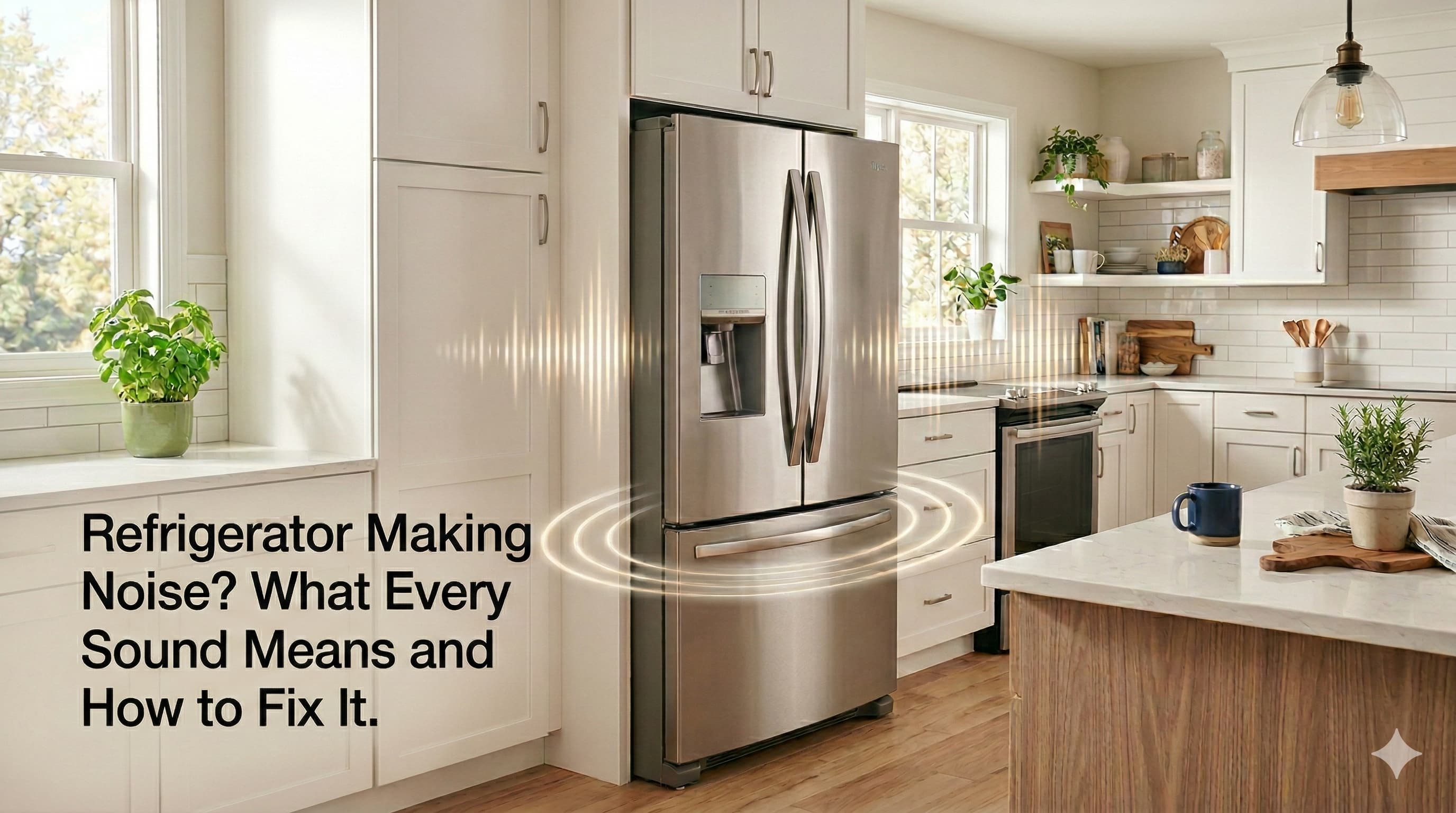
Your refrigerator makes many sounds during normal operation, including humming, clicking, and gurgling. But grinding, squealing, or loud buzzing can signal failing components. This guide explains every common refrigerator noise, identifies the cause by location, and tells you when to DIY versus call a technician.
Refrigerator Making Noise? What Every Sound Means and How to Fix It
TL;DR
Refrigerators make a variety of sounds, and most are completely normal. Humming and buzzing usually come from the compressor or condenser fan, clicking signals the defrost cycle or relay, and gurgling is just refrigerant flowing through the system. Loud grinding, persistent knocking, or squealing, however, can signal failing components that need attention. This guide covers every common refrigerator noise, what causes it, and when to call a technician.
The Short Answer: Why Is My Refrigerator So Loud?
Most refrigerator noises are part of normal operation. Your fridge is a complex appliance with a compressor, multiple fans, a defrost system, and circulating refrigerant - all of which produce sound. A low hum, occasional click, or soft gurgle is nothing to worry about. The sounds that should concern you are ones that are new, persistent, or getting louder over time. Grinding, screeching, loud buzzing, or rhythmic knocking often point to a component that's wearing out or obstructed. The key is knowing what normal sounds like for your specific unit so you can catch changes early, before a minor issue becomes an expensive repair.
Normal Refrigerator Sounds You Can Safely Ignore
Every refrigerator produces a baseline level of operational noise. Understanding these sounds will save you unnecessary anxiety and service calls.
Humming or Low Buzzing
The most common refrigerator sound is a steady, low-pitched hum. This comes from the compressor - the motor responsible for circulating refrigerant through the cooling system. The compressor cycles on and off throughout the day, so you'll notice periods of quiet followed by this familiar hum. Modern compressors are designed to run quietly, typically producing between 32 and 47 decibels, roughly the volume of a library or quiet conversation. If the hum has been consistent since you bought the fridge, it's perfectly normal.
Gurgling or Bubbling
A gurgling or bubbling sound is refrigerant moving through the evaporator coils and expansion valve. This is especially common after the compressor shuts off or when the fridge transitions between cooling cycles. Think of it like water flowing through pipes - because that's essentially what it is, except the "water" is a specialized cooling fluid. This sound is a sign your refrigerator is working exactly as designed.
Clicking
Brief clicking sounds typically occur when the compressor starts up or shuts down, or when the defrost timer activates. You might hear a click followed by the hum of the compressor kicking in, or a click when it turns off. The defrost system in frost-free refrigerators also produces a click when it cycles on, usually once or twice per day. Occasional clicking is part of normal operation.
Soft Whirring or Fan Noise
Your refrigerator has at least two fans: a condenser fan near the bottom or back, and an evaporator fan inside the freezer compartment. Both create a soft whirring sound when running. You'll notice the evaporator fan speed up when you open the door on some models. This is normal behavior as the fridge works harder to maintain temperature after warm air enters.
Sounds That Signal a Problem
When a refrigerator sound changes character, increases in volume, or appears suddenly, it often indicates a mechanical issue. Here's what to listen for and what each problem sound means.
Loud Grinding or Scraping
A grinding or scraping noise is one of the more urgent sounds to address. It often comes from the evaporator fan or condenser fan blades contacting ice buildup, a displaced part, or a failing motor bearing. If the sound gets louder when you open the freezer door, the evaporator fan is the likely culprit. Ice can accumulate on the fan blades when the defrost system isn't working properly, causing the blades to scrape against it with each rotation. A technician can defrost the system and diagnose why ice is building up in the first place.
Persistent Loud Buzzing
While a soft buzz is normal, a loud or constant buzzing that doesn't stop can indicate a problem with the compressor, the condenser fan motor, or the water inlet valve. If your fridge is connected to a water line and the buzzing occurs during ice making, the water inlet valve may be partially clogged or failing. If the buzzing comes from the back or bottom of the unit, the condenser fan motor may be struggling due to dust buildup or bearing wear. Cleaning the condenser coils and fan is a good first step before calling for service.
Knocking or Banging
Rhythmic knocking usually points to a condenser fan or evaporator fan with a loose or warped blade. The blade hits something with each rotation, producing a consistent knock. A single loud bang when the compressor starts up can indicate a failing compressor mount or a condition called "hard starting," where the compressor struggles to turn on. If knocking is intermittent and soft, monitor it. If it's loud or constant, have it inspected.
Squealing or Screeching
A high-pitched squeal or screech is almost always a fan motor issue. The bearings inside the motor dry out over time, producing this unmistakable sound. It may come and go at first but will become more consistent as the bearings continue to deteriorate. Evaporator and condenser fan motors are relatively inexpensive to replace, so addressing this early prevents the motor from seizing completely and causing further damage.
Rattling or Vibrating
Rattling can be as simple as the fridge not sitting level on the floor, causing it to vibrate against the surface. It can also come from loose drain pan underneath the unit, items on top of the refrigerator, or condenser coils that need cleaning. Before assuming the worst, check that the fridge is level using the adjustable feet, clear anything resting on or against the unit, and inspect the drain pan. If the rattling persists after these checks, the compressor mounts may be loosening.
Hissing or Sizzling
A brief hissing sound is often normal - it's refrigerant flowing through the expansion valve or water dripping onto the defrost heater during the defrost cycle. However, a prolonged or continuous hiss could indicate a refrigerant leak, which is a serious issue requiring professional repair. If you notice the hissing accompanied by your fridge not cooling properly, contact a technician promptly.
How to Diagnose Refrigerator Noises by Location
Pinpointing where the noise originates helps narrow down the cause quickly.
Noise From the Back
Sounds from the rear of the fridge typically involve the compressor or condenser fan. Pull the fridge away from the wall (leave a few inches of clearance regardless) and listen. A struggling compressor sounds like a loud hum that cycles irregularly, while a failing condenser fan will produce grinding or buzzing. Check for dust and debris on the condenser coils while you're back there - dirty coils make the whole system work harder and louder.
Noise From Inside the Freezer
The evaporator fan sits inside the freezer compartment, usually behind a rear panel. If the noise gets louder when you open the freezer door and quiets down or stops when you close it, the evaporator fan or its surrounding components are the source. Ice buildup around the fan is the most common cause, but a failing fan motor can also be responsible.
Noise From the Bottom
The drain pan, compressor, and condenser fan are all located beneath or at the bottom rear of most refrigerators. A rattling drain pan is an easy fix - simply reposition it. Compressor and fan noises from this area are more involved but are usually identifiable by their pitch and pattern.
When to Call a Professional vs. DIY
Some refrigerator noise issues are straightforward to handle yourself, while others require a qualified appliance technician.
You can typically handle leveling the refrigerator, cleaning condenser coils, repositioning the drain pan, removing items touching or resting on the fridge, and checking for ice buildup around the evaporator fan (with the fridge unplugged). Call a professional for compressor issues, refrigerant leaks, fan motor replacements, repeated ice buildup suggesting a defrost system failure, and any electrical buzzing or burning smell accompanying the noise.
As a general rule, if the noise is accompanied by a change in cooling performance - food not staying cold, ice melting in the freezer, or frost building up excessively - don't wait. These combined symptoms suggest a problem that will worsen over time.
Key Takeaways
- Humming, gurgling, clicking, and soft whirring are normal refrigerator sounds produced by the compressor, refrigerant, defrost system, and fans during regular operation.
- Grinding or scraping usually means ice buildup on the evaporator fan blades or a failing fan motor, especially if louder when the freezer door is open.
- Loud buzzing can indicate a failing compressor, dirty condenser coils, or a clogged water inlet valve - start by cleaning the coils and checking the water line connection.
- Locate the noise first - back of the fridge points to the compressor or condenser fan, inside the freezer points to the evaporator fan, and the bottom points to the drain pan or compressor.
- Rattling is often the simplest fix, usually caused by an unlevel fridge, loose drain pan, or items resting against the unit.
- Any noise paired with poor cooling performance should be addressed promptly, as it likely indicates a failing component that will worsen without repair.
- Clean your condenser coils every six to twelve months to reduce noise, improve efficiency, and extend the life of your refrigerator.
Want to catch appliance problems early?
Get The Appliance Survival Kit — a simple system to spot issues before they become emergencies.
Learn More — $27