
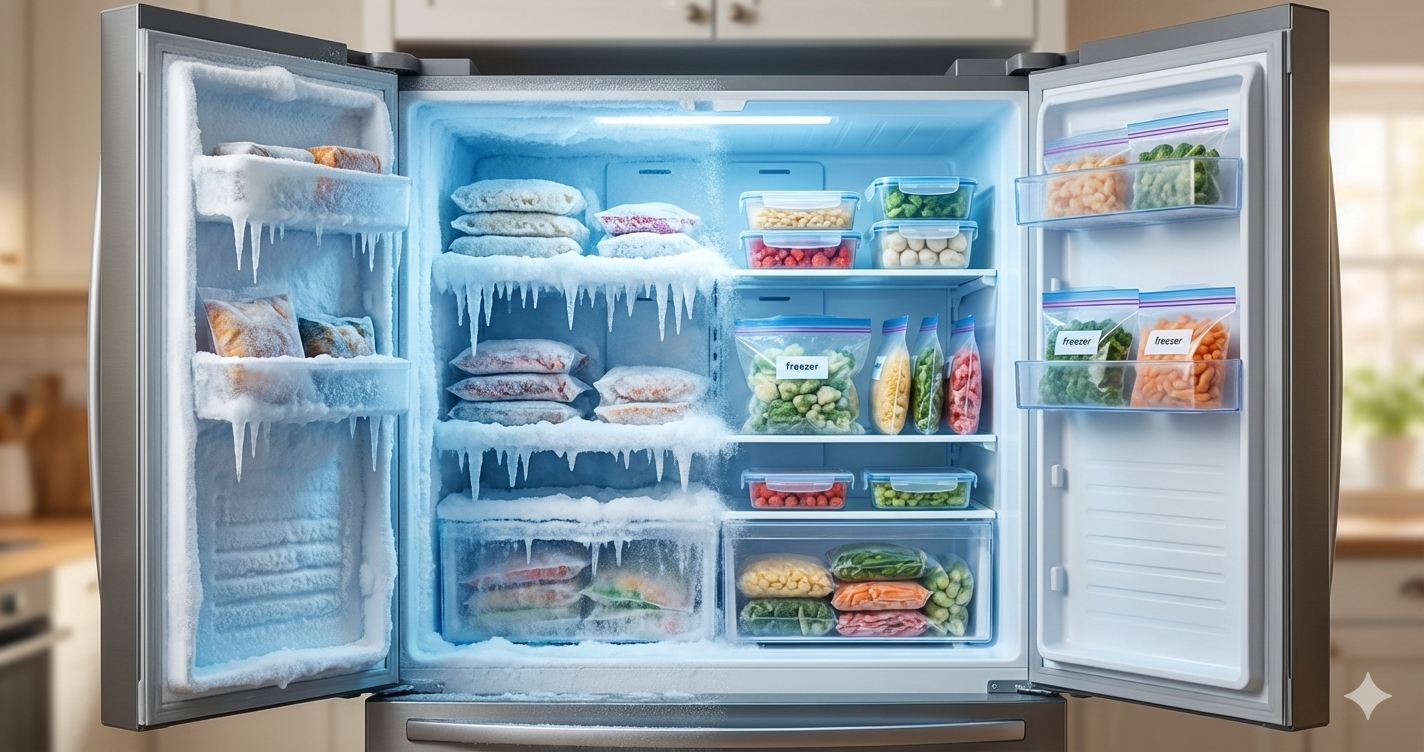
Freezer frost buildup happens when warm, moist air enters and freezes on interior surfaces. Common causes include worn door gaskets, frequent door opening, overpacking, and storing warm food. Prevention is simple: maintain seals, organize for airflow, cool food first, and use airtight packaging. Persistent frost may need professional repair.
Freezer Frost Buildup: What Causes It and How to Prevent It
TL;DR
Freezer frost buildup happens when warm, moist air enters your freezer and the moisture freezes on interior surfaces. The most common culprits are a faulty door seal, frequent door opening, overpacking, and temperature setting issues. Left unchecked, frost reduces efficiency, raises energy bills, and can damage stored food. Regular maintenance, proper organization, and a few simple habit changes can keep frost at bay and your freezer running smoothly.
The Short Answer: Why Is My Freezer Frosting Up?
Frost forms inside your freezer whenever moisture-laden air meets the cold interior surfaces. Every time you open the door, warm air rushes in, and the water vapor in that air freezes on contact with the walls, shelves, and food packaging. A small amount of frost is normal, but excessive buildup usually points to a specific problem - a worn door gasket, a freezer set too cold or too warm, poor airflow from overpacking, or food being stored while still warm. The good news is that most causes are easy to fix without a service call. Below, we break down every major cause, walk through prevention strategies, and help you decide when it's time to call a professional.
How Frost Forms Inside Your Freezer
To prevent frost, it helps to understand what's actually happening inside your freezer on a basic level. Your freezer works by pulling heat out of the interior and venting it into the surrounding room. The evaporator coils inside the freezer get extremely cold, which is what keeps your food frozen.
When warmer air enters the freezer - through an opened door, a broken seal, or any gap - the moisture in that air condenses and immediately freezes on the coldest surfaces it touches. Think of it the same way dew forms on grass in the morning, except instead of liquid water, you get ice. Over time, thin layers of frost compound into thick sheets that coat walls, vents, and food packaging.
Modern frost-free freezers have an automatic defrost cycle that periodically warms the evaporator coils just enough to melt accumulated frost. The water drains away through a small tube. But if the rate of frost formation outpaces the defrost cycle - or the defrost system malfunctions - frost starts winning the battle, and buildup accelerates.
The Most Common Causes of Freezer Frost Buildup
Several things can cause frost to form faster than your freezer can handle. Some are easy fixes you can tackle in minutes, while others may require a closer look or professional help. Here are the most frequent offenders.
A Worn or Damaged Door Gasket
The rubber seal running around the edge of your freezer door - called the gasket - is your first line of defense against warm air. Over time, gaskets can crack, warp, or lose their flexibility, creating tiny gaps that allow a constant stream of humid air to seep in. Even a small gap can lead to significant frost buildup because the air infiltration never stops.
You can test your gasket with the dollar bill trick: close the door on a dollar bill and try to pull it out. If it slides out easily, the seal isn't tight enough. Visually inspect the gasket for cracks, tears, or areas that look compressed and flat. Cleaning the gasket regularly with warm, soapy water helps maintain its flexibility and removes debris that can prevent a proper seal.
Opening the Door Too Frequently or Too Long
This is one of the most common and most overlooked causes. Every time the door opens, a rush of warm, humid air enters the freezer. If you tend to stand in front of the open freezer deciding what to eat, or if you open and close it repeatedly throughout the day, you're introducing far more moisture than the freezer is designed to handle.
The effect is more pronounced in humid climates or during summer months when indoor humidity levels tend to be higher. Getting into the habit of knowing what you want before you open the door - and closing it quickly - can make a surprising difference in frost accumulation.
Overpacking the Freezer
A full freezer is generally more efficient than an empty one because frozen food helps maintain cold temperatures. However, there's a critical difference between full and overpacked. When you cram a freezer beyond its capacity, you block the air vents that circulate cold air throughout the interior. This creates warm spots where frost tends to form, and it forces the compressor to work harder and run longer.
Make sure you can see and feel air moving when the freezer is running. Leave a small gap between items and the walls, and never block the vents - usually located near the back or top of the freezer compartment.
Storing Hot or Warm Food
Placing warm or hot food directly into the freezer introduces both heat and moisture into the enclosed space. The heat raises the internal temperature, which triggers the compressor to work overtime. Meanwhile, the steam and moisture from the warm food condense and freeze on the nearest cold surfaces, creating a localized frost hotspot.
Always let food cool to room temperature before transferring it to the freezer. If you're freezing soups, stews, or other liquids, consider chilling them in the refrigerator first before moving them to the freezer.
Incorrect Temperature Settings
Your freezer should be set to 0°F (-18°C) for optimal food preservation and efficiency. Setting it too cold doesn't make food freeze "better" - it just causes the compressor to overwork and can actually increase frost buildup by amplifying the temperature difference between the interior and any warm air that enters. Setting it too warm, on the other hand, can prevent the defrost cycle from working correctly and leave food in a partially thawed state that generates more internal moisture.
Use an appliance thermometer to verify your freezer's actual temperature, as the built-in dial or digital readout isn't always accurate.
A Malfunctioning Defrost System
If your frost-free freezer is developing heavy frost despite good habits, the automatic defrost system may be failing. This system includes a defrost timer (or control board), a defrost heater, and a defrost thermostat. If any one of these components fails, the periodic melt cycle doesn't happen, and frost builds up rapidly - often concentrating on the back wall or around the evaporator coils.
Signs of a defrost system failure include a thick, uniform layer of frost on the back wall, the freezer running constantly, and food not staying as cold as it should. This type of issue generally requires professional diagnosis and repair.
How Frost Buildup Affects Your Freezer and Your Wallet
Frost isn't just an annoyance - it actively works against your freezer's ability to do its job. Understanding the real cost of unchecked frost can motivate you to stay on top of prevention.
Reduced Efficiency and Higher Energy Bills
Frost acts as insulation on the interior surfaces and coils of your freezer, but not the good kind. It makes it harder for the freezer to transfer heat out of the compartment, which means the compressor has to run longer and more frequently to maintain the set temperature. According to the U.S. Department of Energy, even a quarter inch of frost buildup can increase energy consumption noticeably. Over a year, that adds up on your electricity bill.
Food Quality and Safety Concerns
Frost buildup often leads to freezer burn on your food. Freezer burn happens when air reaches the surface of frozen food, causing dehydration and oxidation. You'll see it as grayish-brown, leathery patches on meat or icy crystals coating frozen vegetables. While freezer-burned food is still technically safe to eat, the taste and texture suffer significantly - which often means wasted food and wasted money.
Heavy frost can also create inconsistent temperatures inside the freezer, meaning some items may partially thaw and refreeze. This compromises food safety, particularly with meats, seafood, and prepared meals.
Shortened Appliance Lifespan
When your freezer has to work harder to compensate for frost buildup, the compressor, fan motors, and other mechanical components experience increased wear. Over time, this can shorten the overall lifespan of the appliance and lead to earlier - and more expensive - breakdowns or replacement.
How to Prevent Freezer Frost Buildup
Prevention is far easier than dealing with heavy frost after it's already formed. These strategies address the root causes and keep your freezer running clean and efficient.
Inspect and Maintain the Door Gasket
Check your freezer's door gasket every few months for signs of wear, cracking, or warping. Clean it with warm water and mild soap to keep it supple and free of debris. If the gasket fails the dollar bill test or you can see visible gaps when the door is closed, replace it. Replacement gaskets are widely available for most freezer brands and are a relatively inexpensive fix compared to the energy cost of a bad seal.
Minimize Door Open Time
Make it a habit to decide what you need before opening the door. Organize your freezer so frequently used items are easy to grab quickly. If you have kids who tend to browse, consider labeling bins or shelves so everyone knows where things are. Even reducing your average door-open time by a few seconds per opening adds up significantly over weeks and months.
Organize for Airflow
Keep your freezer well-stocked but not overpacked. Use bins, baskets, or bags to group similar items and maintain clear pathways for air to circulate. Most importantly, never block the air vents. If you're not sure where the vents are in your freezer, check the owner's manual or look for small grille-like openings along the back or top wall.
Cool Food Before Freezing
Always let hot or warm food cool to room temperature before placing it in the freezer. For large batches of soup, chili, or cooked grains, transfer them to shallow containers to speed cooling, then refrigerate before freezing. This one habit alone can dramatically reduce the amount of moisture you introduce to the freezer.
Verify Your Temperature Setting
Set your freezer to 0°F (-18°C) and confirm with a standalone appliance thermometer. Check the reading periodically, especially after power outages or if you notice any changes in frost patterns. Avoid the temptation to crank the setting colder "just to be safe" - it won't help your food and will increase frost and energy costs.
Use Airtight Packaging
Moisture from improperly sealed food is a significant source of internal humidity in your freezer. Use freezer-grade bags, airtight containers, or vacuum-sealed packaging for everything you store. Squeeze out as much air as possible from bags before sealing. This not only reduces frost but also protects your food from freezer burn.
When to Call a Professional
Most frost issues can be solved with the maintenance and habit changes described above. But some situations call for expert help. Consider calling a qualified appliance technician if you notice a thick, uniform frost layer on the back wall that returns quickly after manual defrosting, as this strongly suggests a defrost system failure. If your freezer runs constantly without cycling off, or if you hear unusual sounds like clicking, buzzing, or excessive humming, these can indicate compressor or fan issues that go beyond a simple DIY fix.
If your freezer is more than 10-15 years old and experiencing repeated frost problems, it may also be worth evaluating whether repair or replacement makes more financial sense. Newer models are significantly more energy-efficient and have improved defrost systems that handle moisture much more effectively.
Key Takeaways
-
Frost forms when warm, moist air enters your freezer and the moisture freezes on cold interior surfaces. A small amount is normal, but excessive buildup signals a problem.
-
The door gasket is the most common culprit. Inspect it regularly, clean it with warm soapy water, and replace it if it's cracked, warped, or fails the dollar bill test.
-
Your daily habits matter more than you think. Minimizing door open time, cooling food before freezing, and using airtight packaging all reduce moisture inside the freezer.
-
Don't overpack your freezer. Blocked air vents create warm spots, increase frost formation, and force the compressor to overwork.
-
Set your freezer to 0°F (-18°C) and verify with a thermometer. Going colder doesn't help food quality and actually increases frost and energy costs.
-
Unchecked frost costs you money through higher energy bills, wasted freezer-burned food, and premature wear on your appliance.
-
If frost returns quickly after defrosting, call a technician. Persistent, heavy frost often points to a defrost system malfunction that needs professional repair.
A little preventive maintenance goes a long way with your freezer. Stay on top of the basics, and you'll keep frost under control, your food in better condition, and your energy bills where they should be.
Want to catch appliance problems early?
Get The Appliance Survival Kit — a simple system to spot issues before they become emergencies.
Learn More — $27