
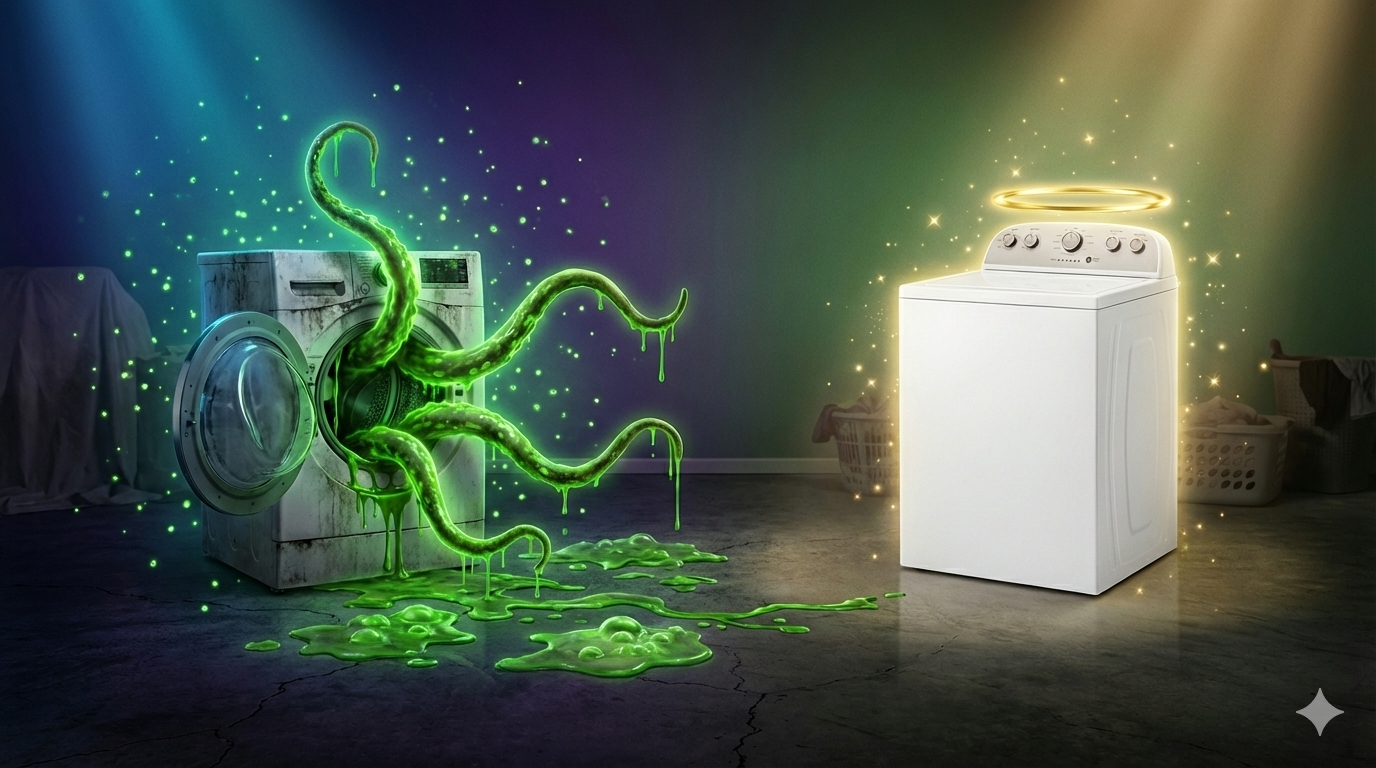
Front-load and top-load washers differ in maintenance demands, lifespan, and repair costs. Top-loaders last longer with less upkeep, while front-loaders offer better efficiency at the cost of more regular cleaning. This guide compares both types to help you choose the right washer.
Front-Load vs. Top-Load Washers: Maintenance and Longevity Compared
TL;DR
Choosing between a front-load and top-load washer comes down to how much maintenance you're willing to do and how long you expect the machine to last. Top-load washers generally last longer (10-15 years) thanks to simpler mechanics and lower maintenance demands, while front-load washers (roughly 10-11 years) offer superior efficiency but require more regular upkeep-particularly around the door gasket. Both types can deliver a long lifespan if you stay on top of routine care.
The Short Answer: Which Washer Lasts Longer and Is Easier to Maintain?
Top-load washers tend to have the edge in longevity and ease of maintenance. Their simpler mechanical design means fewer parts that can fail, and they avoid the most common front-loader headache: mold and mildew buildup around the rubber door seal. That said, front-load washers aren't far behind on lifespan when properly maintained, and they come with meaningful advantages in water efficiency, energy savings, and gentler fabric care. The "right" choice depends on whether you prioritize low-maintenance convenience or long-term efficiency savings-and how disciplined you are about monthly cleaning routines.
How Long Does Each Type Actually Last?
The lifespan gap between front-load and top-load washers is real, but it's narrower than many people assume. Top-load washers typically last around 10 to 15 years with proper care, and some well-built agitator models from brands like Speed Queen can push past the 20-year mark. Front-load washers generally last around 10 to 11 years on average, though many owners report getting 12 or more years from their machines with diligent maintenance.
The difference comes down to mechanical complexity. Top-loaders use a vertical drum orientation that naturally distributes weight more evenly, putting less stress on bearings and internal components. Front-loaders, with their horizontal drum, place continuous gravitational strain on bearings during every spin cycle. Over thousands of loads, that added stress can accelerate wear on key components.
It's worth noting that lifespan numbers are averages, not guarantees. A neglected top-loader can fail at seven years, while a meticulously maintained front-loader might run strong for 14. Your habits matter more than the machine type alone.
The Role of Build Quality
Not all washers within the same category are built equally. Premium front-load models from brands like Miele, Bosch, and Electrolux are engineered for durability and often come with extended warranties on motors and tubs-some up to 10 years or even lifetime coverage on the drum. Budget top-loaders, on the other hand, may cut corners on components and wear out faster despite their simpler design.
When comparing longevity, you're really comparing three variables at once: the washer type, the build quality of the specific model, and the maintenance habits of the owner. All three matter.
Maintenance Requirements: A Side-by-Side Look
This is where front-load and top-load washers diverge most sharply. Front-loaders demand a more hands-on maintenance routine, while top-loaders are comparatively forgiving.
Front-Load Washer Maintenance
Front-load washers are more prone to moisture buildup because of their airtight door seal. That rubber gasket-the thick ring that keeps water from leaking during horizontal tumbling-creates a warm, damp environment where mold and mildew thrive if left unchecked. This is the single biggest maintenance concern with front-loading machines.
A solid front-load maintenance routine looks like this: after every load, wipe down the rubber door gasket and leave the door cracked open to let air circulate. Once a month, run a hot cleaning cycle (many models have a dedicated "Tub Clean" setting) using baking soda, white vinegar, or a washer cleaning tablet. Clean the detergent dispenser monthly as well, since residue buildup can clog dispensing mechanisms and contribute to odors. Every three to six months, check and clean the drain pump filter-small items like coins, hair ties, and lint can accumulate and restrict water flow.
Additionally, front-load owners should inspect their inlet hoses annually for cracks or bulging, and consider upgrading to braided stainless steel hoses, which are more durable and far less likely to burst.
Top-Load Washer Maintenance
Top-load washers are significantly lower maintenance. Because the lid opens from above and water drains downward naturally, moisture doesn't pool around seals the way it does in front-loaders. Mold and mildew are far less common, though not impossible-leaving the lid open after washing is still good practice.
Monthly maintenance for a top-loader is straightforward: run a hot cleaning cycle with vinegar or a commercial washer cleaner to clear detergent residue and mineral deposits. Wipe down the drum and the top rim of the tub where grime can collect. Check hoses annually, just as you would with a front-loader.
The main operational concern with top-loaders is load balancing. Uneven loads can cause the drum to vibrate aggressively during spin cycles, which puts stress on the suspension and bearings. Distributing laundry evenly in the drum and avoiding chronic overloading goes a long way toward preventing mechanical wear.
Common Problems and Repair Costs
Understanding the most frequent failure points for each washer type helps you anticipate costs and know what to watch for as your machine ages.
Front-Load Washer Issues
The most common front-load problems include door gasket deterioration (replacement runs roughly $120-$500 including labor), door latch and sensor failures ($100-$250), and bearing wear from the horizontal drum orientation. Bearing replacement is one of the more expensive front-loader repairs, often reaching $200-$400 or more because it requires significant disassembly. Control board malfunctions, which affect cycle timing and error codes, can cost $200-$500 to resolve.
Front-load washers also tend to cost more to repair overall. Their more complex design and tighter component layout mean longer labor times and, in some cases, specialized parts. Industry estimates suggest front-loader repairs run 20-30% higher than comparable top-loader fixes.
Top-Load Washer Issues
Top-load washers most commonly experience drainage problems, faulty lid switches, and-in agitator models-worn agitator dogs (the small directional cogs that drive the agitator's motion). These are generally inexpensive repairs. Agitator dog replacement, for example, is a common DIY fix costing under $20 in parts. Lid switch replacements typically run $50-$150 with professional labor.
Transmission problems can occur in older top-loaders and are more costly ($200-$350), but they're less frequent than bearing failures in front-loaders. Overall, top-load repair costs typically range from $50 to $300, compared to $100 to $400 for front-loaders.
The Efficiency Factor: Does It Offset Maintenance Costs?
Front-load washers use significantly less water and energy per cycle than top-loaders. A typical front-loader uses about 10-15 gallons of water per load, while a standard top-loader uses 20-25 gallons. Front-loaders also spin faster, extracting more water from clothes and reducing dryer time-which translates to additional energy savings on the back end.
Over a 10-year lifespan, those efficiency gains can add up to meaningful savings on utility bills. Whether they fully offset the higher purchase price and maintenance costs of a front-loader depends on your local water and energy rates, how many loads you run per week, and whether you encounter any major repairs along the way.
For households running five or more loads per week, the efficiency math tends to favor front-loaders. For lighter-use households doing two to three loads weekly, the savings may not be enough to justify the higher upfront and maintenance costs.
Front-Load vs. Top-Load: Quick Comparison
| Factor | Front-Load | Top-Load |
|---|---|---|
| Average lifespan | 10-12 years | 10-15 years |
| Monthly maintenance | Gasket cleaning, tub clean cycle, filter check | Tub clean cycle, wipe down |
| Mold/mildew risk | Higher (door gasket traps moisture) | Lower (gravity drains naturally) |
| Average repair cost | $100-$400 | $50-$300 |
| Water usage per load | 10-15 gallons | 20-25 gallons |
| Energy efficiency | Higher | Lower |
| Repair complexity | More complex, costlier labor | Simpler, parts more accessible |
| Common failure points | Door gasket, bearings, sensors | Drain issues, lid switch, agitator |
Which Washer Should You Choose?
Choose a front-load washer if you're willing to commit to a regular monthly cleaning routine, you value water and energy efficiency, you have limited laundry room space (front-loaders can be stacked with a dryer), or you wash a high volume of laundry weekly and want to maximize utility savings over time.
Choose a top-load washer if you want the simplest possible maintenance routine, you prefer lower upfront costs and cheaper repairs, you want the option to add items mid-cycle easily, or you prioritize durability and longevity above efficiency. Top-loaders with impeller designs (no center agitator) offer a middle ground-they're gentler on clothes and more efficient than traditional agitator models while retaining the maintenance simplicity of the top-load format.
Choose either with confidence if you buy from a reputable brand with strong warranty coverage and commit to basic monthly maintenance. The difference in lifespan between well-maintained front-loaders and top-loaders is often just a year or two in practice-not the dramatic gap some sources suggest.
Key Takeaways
-
Top-load washers generally last longer (10-15 years vs. 10-12 for front-loaders) due to simpler mechanical design and less bearing stress.
-
Front-load washers require more regular maintenance, particularly monthly gasket cleaning and drain filter checks, to prevent mold and mildew buildup.
-
Repair costs run higher for front-loaders-typically $100-$400 versus $50-$300 for top-loaders-because of their more complex design.
-
Front-loaders use roughly half the water per load and spin faster, which can offset higher maintenance costs for high-volume households.
-
Build quality and brand matter as much as washer type; a premium front-loader can outlast a budget top-loader.
-
The single most impactful maintenance habit for front-loaders is leaving the door open after each wash to prevent moisture-related problems.
-
For either type, running a monthly hot cleaning cycle and inspecting hoses annually are the baseline habits that extend machine life the most.
Want to catch appliance problems early?
Get The Appliance Survival Kit — a simple system to spot issues before they become emergencies.
Learn More — $27