
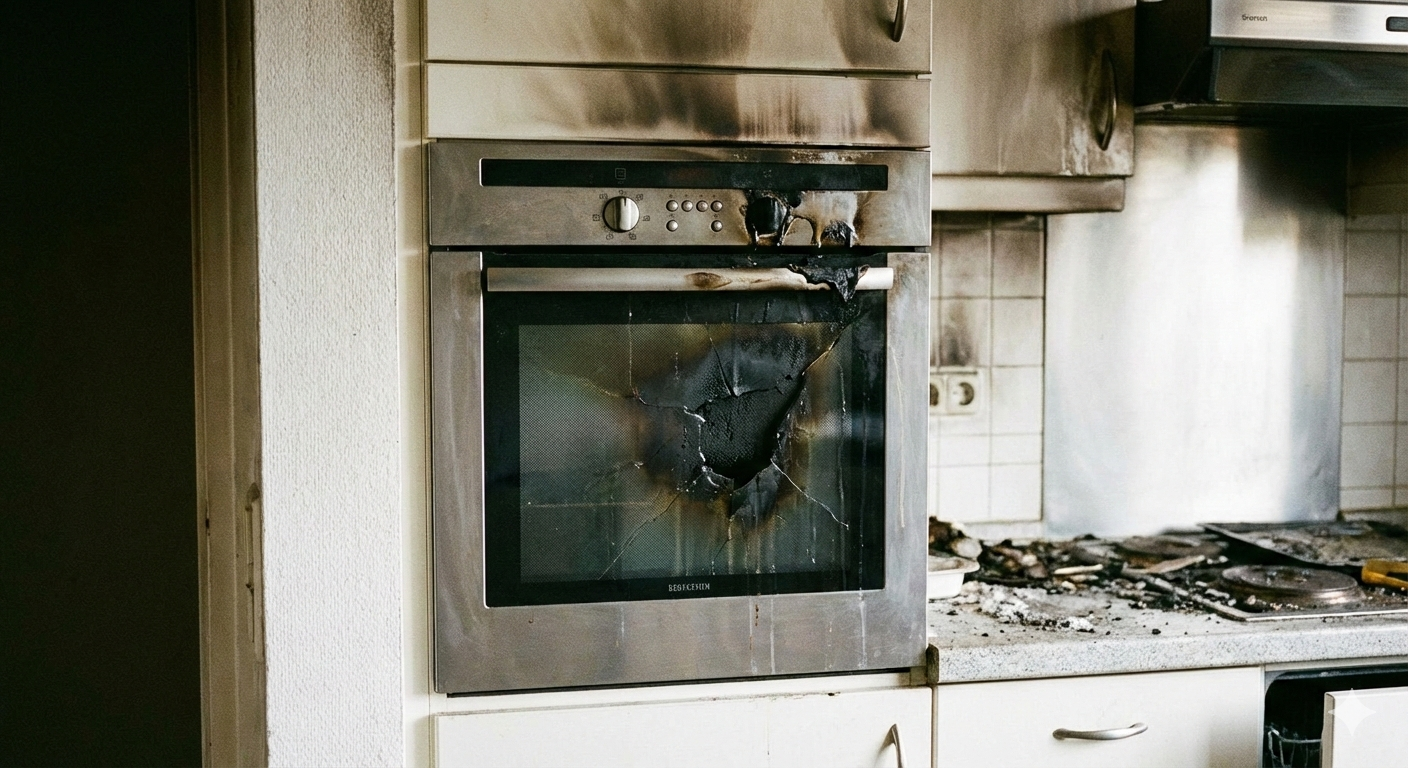
Self-cleaning ovens can damage thermostats, heating elements, and seals with extreme 800-1000°F temperatures-but failures occur in only 1% of cycles. Use the feature sparingly, remove racks, ventilate well, and avoid running it before major cooking events to minimize risk.
Is Your Self-Cleaning Oven Destroying Itself? What You Need to Know
TL;DR
Self-cleaning ovens can and do cause damage-appliance repair professionals consistently rank the self-clean cycle among the top reasons for oven service calls. The extreme heat (800-1000°F) stresses components like thermostats, door seals, and heating elements beyond their normal limits. To minimize risk, use the feature sparingly (two to four times per year at most), remove racks, wipe out heavy debris first, ensure ventilation, and never run it right before a big meal when you can't afford a breakdown.
The Short Answer: Can Self-Cleaning Really Damage Your Oven?
Yes, self-cleaning can damage your oven-but context matters. The feature works by heating your oven to extreme temperatures (800-1000°F) to incinerate food residue into ash. While this eliminates the need for chemical cleaners and heavy scrubbing, those temperatures push internal components far beyond normal cooking conditions.
Appliance repair professionals report that self-cleaning cycles are among the most common triggers for service calls. Thermostats blow, door locks fail, and heating elements burn out. One veteran technician with over 30 years in the industry describes self-cleaning as the number one reason he gets called to fix ovens. The real question isn't whether to use self-clean, but how to use it wisely-and whether the convenience is worth the risk.
How Self-Cleaning Ovens Actually Work
Understanding what happens inside your oven explains why problems occur. When you activate the self-clean cycle, the oven locks its door and heats the interior to between 800°F and 1000°F-roughly twice the temperature used for normal cooking. At these temperatures, food residue, grease, and spills incinerate into a fine white ash that you simply wipe away once the oven cools.
The process typically runs three to five hours, including heating and cooling time. Steam-clean options on newer models offer a gentler alternative, using lower temperatures (around 400°F) and water vapor to loosen debris. Steam cleaning takes about an hour and works well for light messes but won't handle heavy buildup.
The convenience is undeniable. No harsh chemical fumes, no hours of scrubbing, and no crawling inside your oven with a sponge. But that convenience comes with tradeoffs that every oven owner should understand.
Real Risks: What Can Go Wrong
Component Damage
The parts inside your oven were designed for cooking temperatures, not incineration. During a self-clean cycle, several components face stress they weren't fully engineered to handle repeatedly.
The high-limit switch, which prevents overheating during normal use, is particularly vulnerable. Thermostats and thermal fuses can blow, leaving your oven unable to heat at all. Heating elements-especially the hidden ones in newer ovens-may burn out. If a hidden element fails, repairs become significantly more expensive because technicians must pull the entire oven out to access it from behind.
Door seals and gaskets degrade faster under extreme heat. The oven door glass, though heat-strengthened, can crack or shatter in rare cases. Even oven knobs and light bulbs sometimes melt or burst. One appliance repair professional with over 30 years of experience describes the self-clean feature as the most common reason for oven service calls.
Air Quality and Fumes
When grease and food residue burn at high temperatures, they release smoke and fumes-including carbon monoxide. Unlike your furnace or water heater, your oven doesn't vent combustion gases outside. Everything releases directly into your kitchen.
For most people with good ventilation, this poses minimal risk. But households with respiratory conditions, young children, or pets should take extra precautions. Birds are especially vulnerable; the fumes can be fatal to them. Running your range hood and opening windows during the cycle is essential, not optional.
Fire Hazard
Heavy grease buildup can ignite during the cycle. While these small fires typically burn out on their own inside the locked oven, they can damage components or, in extreme cases, escalate. This is why manufacturers universally recommend wiping out major debris before running self-clean-but many users skip this step.
The Other Side: Why Some People Use Self-Cleaning Without Issues
Despite the warnings from repair professionals, plenty of homeowners use self-clean for years without problems. When the cycle works as intended, ovens get remarkably clean with minimal effort-no scrubbing, no chemicals, just a thin layer of ash to wipe away.
The feature also eliminates exposure to harsh chemical oven cleaners, which carry their own health concerns. For people who dislike handling caustic sprays or can't physically manage the scrubbing required for manual cleaning, self-clean provides genuine value.
Manufacturers design ovens with self-cleaning in mind. GE's oven cleaning experts note that engineers test extensively under tough conditions to ensure the cycle performs safely. The technology has been around since 1963, and modern ovens include multiple safety features: automatic door locks, thermal cutoffs, and improved insulation.
That said, the appliance repair industry sees a different picture. Technicians deal with the failures that manufacturers don't advertise-the service calls that come in the week after someone ran self-clean. Whether you fall into the "never had a problem" camp or the "never again" camp often comes down to oven age, usage frequency, and plain luck.
Pros and Cons at a Glance
The case for using self-clean:
No chemicals required. The feature uses heat alone, avoiding the harsh fumes and handling concerns of commercial oven cleaners. This matters especially for households with children or chemical sensitivities.
Effective deep cleaning. High-heat pyrolytic cleaning reaches areas manual scrubbing often misses. Heavily baked-on residue that would take hours to remove by hand turns to wipeable ash.
Time savings. While the cycle runs for hours, your active involvement amounts to maybe ten minutes-removing racks, wiping debris, and cleaning up ash afterward.
The case against using self-clean:
Risk of component failure. Though uncommon, repairs for blown thermostats, failed heating elements, or fried control boards can run $300 to $600. Hidden elements make repairs more difficult and expensive.
Air quality concerns. Smoke, fumes, and carbon monoxide release into your home. Proper ventilation is mandatory, and some households should avoid the feature entirely.
Timing vulnerability. If something fails, your oven becomes unusable until repaired-potentially disastrous during the holidays or before a big event.
Safe Self-Cleaning: Best Practices That Reduce Risk
If you decide to use self-clean, these steps minimize the chances of problems.
Remove everything from inside the oven first. Take out racks, pans, thermometers, and any aluminum foil. Racks can warp and discolor at extreme temperatures, and their coatings may transfer onto rack guides. Many manufacturers recommend cleaning racks separately by hand.
Wipe out heavy debris before starting. A quick pass with a damp cloth to remove large food chunks and pooled grease dramatically reduces smoke, odor, and fire risk during the cycle. The goal is to leave only the baked-on residue that you can't easily remove.
Ventilate aggressively. Turn on your range hood to its highest setting. Open kitchen windows if possible. If you have pets-especially birds-move them to another room with the door closed. Don't leave the house entirely; while unlikely, you should be present to monitor for excessive smoke or other issues.
Choose shorter cycles when available. If your oven offers cycle length options, select the shortest one that matches your soil level. Less time at extreme temperatures means less stress on components.
Time it strategically. Never run self-clean the night before Thanksgiving or any event where you need a working oven. Schedule it at least a month before any major cooking. Many professionals recommend running it no more than two to four times per year, using steam clean or manual methods for maintenance between deep cleans.
Decision Guide: Which Cleaning Method Is Right for You?
Choose professional cleaning if:
You want a deep clean without any risk to your oven's components. Your oven is older and you're trying to extend its lifespan. You value your time and would rather pay someone than spend hours on the task. You have a busy schedule and can't afford to have your oven tied up for a full day. You've had a bad experience with self-clean in the past.
Choose self-clean if:
You have a moderately dirty oven with baked-on residue that manual cleaning won't handle. Your oven is relatively new and in good working condition. You can ventilate your kitchen properly. You're not facing a time-sensitive cooking deadline. You can't use or prefer to avoid chemical cleaners.
Choose steam clean if:
Your oven offers this feature and has only light soiling. You want a gentler, faster option between deep cleans. You clean up spills regularly and don't have heavy buildup. You're concerned about fumes or have pets.
Choose manual cleaning if:
Your oven is older and you want to minimize stress on aging components. You have respiratory conditions or sensitive pets. You need the oven back in service quickly. You're comfortable with chemical cleaners or natural alternatives like baking soda paste. You can't ventilate your kitchen adequately.
Alternatives to Self-Cleaning
Professional Oven Cleaning
One option many homeowners overlook is hiring a professional oven cleaning service. Yes, it costs money-typically $100 to $200 depending on your location and oven condition-but consider what you're getting. A professional can deep clean your oven in one to two hours, often while you're doing something else. Compare that to a self-clean cycle that ties up your oven for four to six hours (plus cooldown), fills your house with fumes, and carries real risk of component failure.
The math works in your favor when you think long-term. A professional cleaning every year or two costs a fraction of a $300-$600 repair bill, let alone the $800-$2,000+ you'd spend replacing an oven that died after a self-clean cycle gone wrong. You also avoid the hassle of being without an oven while waiting for parts or a technician. For busy households or anyone with an older oven they want to protect, professional cleaning is worth serious consideration.
DIY Methods
For regular maintenance, simple methods work surprisingly well. Wiping spills as they happen-once the oven cools-prevents buildup from baking on. This single habit reduces how often any deep cleaning is needed.
For periodic cleaning, a paste of baking soda and water applied to the oven interior and left overnight loosens most grime. Spray with vinegar, let it foam, then wipe clean. This method takes more effort than self-clean but carries zero risk to components.
Commercial oven cleaners work faster but require ventilation and careful handling. Look for fume-free formulas if you're sensitive. Avoid using standard cleaners inside self-cleaning ovens-the special enamel coating can be damaged.
Steam cleaning, if your oven has it, bridges the gap nicely. Pour water in the oven bottom, run the cycle for an hour, and wipe away softened residue. It won't handle heavy buildup but maintains a reasonably clean oven with minimal risk.
Key Takeaways
-
Self-cleaning ovens use extreme heat (800-1000°F) to incinerate food residue, but these temperatures stress internal components beyond normal cooking conditions.
-
Appliance repair professionals consistently cite self-cleaning as one of the top reasons for oven service calls-thermostats, heating elements, and door locks are most vulnerable to failure.
-
Always remove racks, wipe out heavy debris, and ventilate thoroughly before running self-clean; these steps reduce smoke, fire risk, and component stress.
-
Use the feature sparingly-two to four times per year maximum-and never right before an important cooking event when you can't afford an oven breakdown.
-
Professional oven cleaning services cost $100-$200, take one to two hours, and carry zero risk of component damage-often a smarter investment than gambling with self-clean on an older oven.
-
Steam cleaning and manual methods offer safer alternatives for regular maintenance; reserve self-clean for occasional deep cleaning when buildup exceeds what other methods handle.
-
Households with birds, respiratory conditions, or poor ventilation should consider avoiding self-clean entirely due to fumes and carbon monoxide release.
-
An ounce of prevention beats a pound of cure: wiping spills after they happen dramatically reduces how often any deep cleaning is needed.
Want to catch appliance problems early?
Get The Appliance Survival Kit — a simple system to spot issues before they become emergencies.
Learn More — $27