
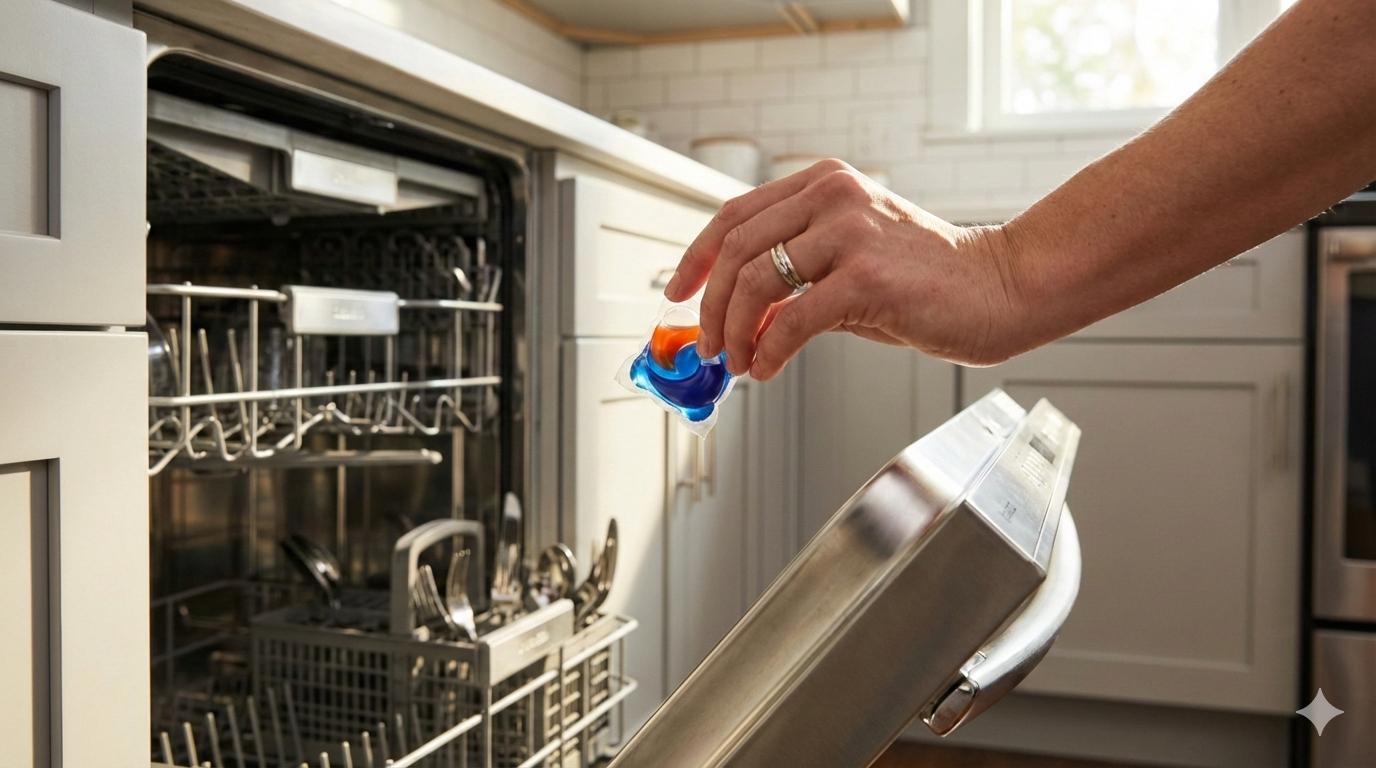
Undissolved dishwasher pods are usually caused by improper loading that blocks the detergent dispenser, low water temperature, clogged spray arms, or hard water buildup. Most fixes take minutes - rearranging your bottom rack, running hot water before starting a cycle, and cleaning spray arms solve the problem for most households.
The Surprising Reason Your Dishwasher Pods Aren't Dissolving
TL;DR
If your dishwasher pods aren't dissolving, the most common culprit isn't a broken machine - it's how you're loading your dishes. A plate, cutting board, or pot placed in front of the detergent dispenser can block the door from opening or shield the pod from water. Beyond loading, low water temperature, clogged spray arms, and hard water buildup are the other usual suspects. Most fixes take less than five minutes.
The Short Answer: Why Won't My Dishwasher Pods Dissolve?
Dishwasher pods need three things to dissolve properly: the dispenser door must open freely, water must be hot enough (at least 120°F), and the spray arms must circulate that water throughout the machine. When any one of these conditions fails, the pod stays partially or fully intact - and your dishes come out dirty.
The fix most people overlook is deceptively simple: rearrange how you load the bottom rack. Tall items, cookie sheets, and overstacked dishes in the lower left area of the rack frequently block water from reaching the dispenser. Before you call a repair technician or buy a new machine, start there. If that doesn't solve it, work through the deeper causes below.
How Dishwasher Pods Actually Work
Before troubleshooting, it helps to understand the basic sequence your dishwasher follows every cycle. Once you press start, the machine fills with water through the inlet valve and begins heating it. Partway through the wash cycle, the detergent dispenser door pops open and the pod drops into the tub. Hot water from the spray arms hits the pod, dissolving its water-soluble film and releasing the detergent. That soapy water then circulates through the spray arms to clean your dishes.
When any link in that chain breaks - the dispenser stays shut, the water is lukewarm, the spray arms can't spin - the pod sits there undissolved. Understanding this sequence makes it much easier to pinpoint exactly where things are going wrong.
The #1 Culprit: You're Loading Your Dishes Wrong
This is the surprising reason most people never suspect, and it's by far the most common cause. The detergent dispenser is located on the inside of the dishwasher door, typically on the lower left side. When you load a large plate, cutting board, baking sheet, or pot directly in front of that dispenser, one of two things happens: either the door physically can't swing open, or the item blocks the water jets from reaching the released pod.
Appliance technicians consistently point to the bottom-left quadrant of the lower rack as the problem zone. Placing bowls, large plates, or bulky cookware in that area obstructs the spray arm's ability to direct water toward the dispenser. The water sprayed from the lower arm is what actually reaches and dissolves the detergent - so if dishes are in the way, the pod never gets the water contact it needs.
The fix is straightforward. Keep only small plates in the front-left area of the bottom rack, and avoid stacking items tightly in that corner. Cookie sheets and cutting boards should go along the sides of the rack, tilted slightly inward. And always confirm that the spray arm below the bottom rack can spin freely without hitting anything. A quick test: run an empty cycle. If the pod dissolves with no dishes inside, your loading pattern is almost certainly the issue.
Low Water Temperature
Dishwasher pods are engineered to dissolve within a specific temperature range, generally between 120°F and 160°F. When the incoming water falls below that threshold, the pod's water-soluble film can't break down effectively, leaving you with a gummy, half-dissolved mess at the bottom of the tub.
There are a few reasons your water might not be hot enough. Your home's water heater could be set too low, or the dishwasher might be located far from the heater, meaning the hot water has to travel a long way through cold pipes before it arrives. Cold mornings or periods of heavy hot water use elsewhere in the house can also drop the temperature below what the pod needs.
The simplest fix is to run your kitchen sink's hot water tap for 30 to 60 seconds before starting the dishwasher. This flushes the cold water out of the pipes so the machine fills with hot water from the start. You can also check your water heater's thermostat - most manufacturers recommend setting it to at least 120°F. If your dishwasher has a "sanitize" or "extra hot" cycle option, using it can provide the extra boost the pod needs to fully dissolve.
Clogged or Damaged Spray Arms
The spray arms are the rotating components inside your dishwasher that distribute pressurized water throughout the tub. They're lined with small holes, and over time, food debris, mineral deposits, and grease can clog those openings. When the holes are blocked, water pressure drops and the pod doesn't get enough direct water contact to dissolve.
Inspecting the spray arms is easy. Most models allow you to unclip or unscrew each arm by hand. Once removed, hold them up to the light and look through the holes for visible blockages. A toothpick or straightened paper clip works well for clearing debris from individual holes. You can also rinse the arms under warm running water to flush out any loose particles. While you have them out, check for cracks - a cracked spray arm loses water pressure and won't spin correctly. Cracked arms need to be replaced, but fortunately they're inexpensive parts on most models.
Hard Water and Mineral Buildup
If you live in an area with hard water - water with a high concentration of dissolved calcium and magnesium - mineral deposits can wreak havoc on your dishwasher's performance over time. These minerals coat the interior of the machine, build up inside the spray arm holes, and create a film on the detergent dispenser that can prevent the pod from releasing properly.
Hard water also reacts directly with the detergent itself, reducing its cleaning effectiveness and sometimes preventing the pod's outer film from fully dissolving. You may notice a white, chalky residue on your glasses and dishes, which is a telltale sign that hard water is the underlying issue.
To combat this, run a cleaning cycle with white vinegar (place a cup on the top rack and run a hot cycle with no dishes) or use a commercial dishwasher descaler once a month. If hard water is a persistent problem in your home, adding a rinse aid to your dishwasher or installing a whole-house water softener can make a significant long-term difference.
A Faulty Detergent Dispenser
The dispenser mechanism relies on a spring-loaded door, a latch, and in most models a small wax motor or solenoid that triggers the door to open at the right point in the cycle. If any of these parts fails - the spring breaks, the latch sticks, or the solenoid burns out - the door won't pop open, and the pod will sit trapped inside the compartment for the entire cycle.
Start by visually inspecting the dispenser. Open and close the door by hand to make sure it moves freely and springs open with a snap. Look for detergent residue caked around the edges, which is a common reason the door sticks. A quick wipe with a damp cloth can often solve the problem. If the door still won't open during cycles after cleaning, the latch or spring mechanism may need to be replaced - a repair that's usually manageable as a DIY project with the help of your dishwasher's manual.
Water Inlet Valve Issues
The water inlet valve controls how much water enters the dishwasher at the start of each cycle. When this valve becomes clogged with sediment or fails mechanically, the machine doesn't fill with enough water. Without sufficient water in the tub, the pod can't dissolve and your dishes won't get clean.
You can test for this by starting a normal cycle, waiting about two minutes, then pressing pause and opening the door. Check the water level in the bottom of the tub. For metal or porcelain tubs, you should see at least half an inch of water. Plastic tubs should have at least three-eighths of an inch. If the water level is noticeably low, the inlet valve is likely restricted or failing and will need to be cleaned or replaced - a job that's best handled by a qualified technician unless you're comfortable with basic appliance repair.
Old or Improperly Stored Pods
This one catches a lot of people off guard. Dishwasher pods have a shelf life, and their water-soluble outer film is sensitive to moisture. If pods have been sitting in a humid cabinet under the sink, or the bag or container wasn't resealed properly, the film can absorb ambient moisture. This causes the pods to get sticky, clump together, or partially dissolve before they ever hit the dishwasher - and paradoxically, that premature breakdown makes them less effective during the actual wash cycle.
Always store your pods in a cool, dry place, and make sure the bag or tub is fully sealed after each use. Handle pods with dry hands only, as even a small amount of moisture can cause them to stick. If your pods look fused together or feel tacky to the touch, it's time to replace them with a fresh supply. Check the packaging for an expiration date as well - expired pods may not dissolve reliably.
Quick Diagnostic: Choose Your Fix
Choose to rearrange your loading if you find the pod still sealed in the dispenser or stuck against the door after a cycle. Something is physically blocking the dispenser from opening or the pod from reaching the water.
Choose to address water temperature if the pod is partially dissolved and sitting in a gummy clump at the bottom of the tub. The film started to break down but didn't have enough heat to finish the job.
Choose to clean the spray arms if the pod is mostly intact in the bottom of the tub and your dishes have food residue on them. Water likely isn't circulating with enough force.
Choose to descale your machine if you see white, chalky deposits on dishes and the interior walls of the dishwasher. Hard water is undermining both the pod and the machine's performance.
Choose to inspect the dispenser if you consistently find the pod untouched inside the closed dispenser compartment after a full cycle. The door mechanism is likely stuck or broken.
Key Takeaways
-
The most common and overlooked cause of undissolved pods is improper dish loading - especially placing large items in the bottom-left area that block the dispenser door or shield the pod from water.
-
Dishwasher pods require water temperatures between 120°F and 160°F to dissolve. Run your kitchen hot water for a minute before starting the machine to ensure the cycle begins with hot water.
-
Clogged spray arm holes prevent water from reaching the pod. Remove the arms periodically and clear debris with a toothpick or paper clip.
-
Hard water buildup reduces pod effectiveness over time. Monthly cleaning cycles with vinegar or a commercial descaler keep mineral deposits in check.
-
Store pods in a cool, dry place with the container sealed. Moisture-damaged or expired pods won't dissolve reliably no matter how well your dishwasher functions.
-
Run an empty test cycle to determine whether the problem is your loading pattern or a mechanical issue. If the pod dissolves without dishes, adjust how you load the rack.
Before calling a repair technician, work through the simple fixes first. The vast majority of pod-dissolving problems come down to loading habits, water temperature, or basic maintenance - all of which you can address in a few minutes.
Want to catch appliance problems early?
Get The Appliance Survival Kit — a simple system to spot issues before they become emergencies.
Learn More — $27