
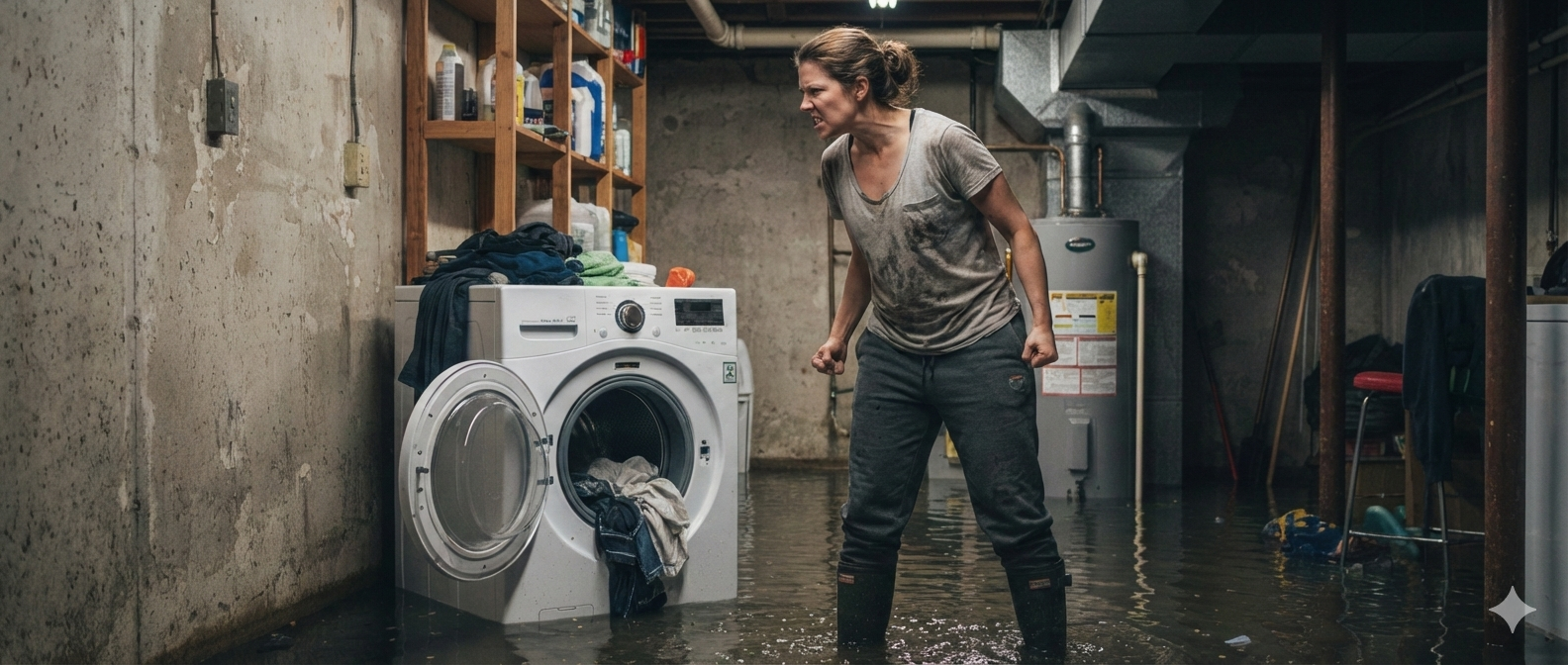
Washing machine hoses should be replaced every three to five years to prevent catastrophic flooding. This guide walks you through the 15-minute DIY replacement process, explains why stainless steel hoses are worth the upgrade, and covers warning signs, maintenance tips, and insurance implications of a burst hose.
How to Replace Washing Machine Hoses: Prevent a Costly Flood
TL;DR
Washing machine hoses should be replaced every three to five years - and a burst hose can release up to 650 gallons of water per hour, causing thousands in damage. Replacing them is a 15-minute DIY job that costs under $25. Turn off the water supply, swap old hoses for braided stainless steel ones, hand-tighten the connections, and check for leaks. It's one of the cheapest and most effective ways to protect your home.
The Short Answer: When and Why Should You Replace Your Washing Machine Hoses?
If your washing machine hoses are more than three years old - or if you notice cracks, bulges, moisture, or stiffness - replace them now. Most plumbing experts recommend swapping them every three to five years regardless of visible wear, because internal deterioration isn't always visible from the outside. According to Farmer's Insurance, broken water supply lines are responsible for roughly half of all water damage claims involving washing machines, with the average claim running about $5,000. Stainless steel braided hoses are the best upgrade over standard rubber, lasting up to 10-15 years and offering far greater resistance to bursting. The entire project takes about 15 minutes and requires nothing more than an adjustable wrench and a bucket.
Why Washing Machine Hoses Fail (And Why It Matters)
Most homeowners don't think twice about the two rubber tubes running behind their washing machine. Those hoses are under constant water pressure 24 hours a day, absorbing vibrations from every spin cycle, and gradually weakening from temperature fluctuations between hot and cold water fills. It's a textbook case of "out of sight, out of mind" - until the day one of them gives out.
Rubber hoses are the standard that ships with most washing machines, and they're the most failure-prone. Over time, the rubber dries out, develops micro-cracks on the inside, and starts to blister or bulge. A phenomenon called water hammer - the hydraulic shock that occurs when a washing machine valve suddenly closes - accelerates that deterioration with every load of laundry you run.
The consequences of a burst hose are severe. A single hose under pressure can release up to 650 gallons of water per hour. If you're at work or on vacation when it happens, the resulting flood can destroy flooring, drywall, cabinetry, and personal belongings in a matter of hours. Water damage affects approximately 14,000 people in the U.S. every day, and roughly 1 in 60 insured homes files a water damage claim annually. The average insurance payout for water damage sits around $12,000-$14,000, but that doesn't account for the time, stress, and uninsured losses that follow.
The good news: this is one of the most preventable disasters in your home.
Warning Signs Your Hoses Need Replacing
Knowing what to look for can save you from a catastrophic failure. You should inspect your washing machine hoses every three to six months - just pull the machine out from the wall a few inches and take a close look. Here's what should trigger an immediate replacement.
Visible Cracks, Blisters, or Bulges
Rubber hoses develop surface cracks and small bubbles as the material degrades. Any bulging indicates the internal structure is weakening and the hose could burst under pressure at any time. Don't wait - replace it immediately.
Moisture or Dripping at Connections
Even a small drip where the hose meets the water valve or the back of the machine signals a failing seal or a corroded fitting. Left unchecked, a slow drip escalates into a major leak. Check both the hot and cold connections each time you inspect.
Stiffness or Brittleness
Healthy rubber hoses have some flexibility. If a hose feels rigid, crunchy, or won't bend slightly when you touch it, the material has dried out and lost its structural integrity. Stiff hoses are far more likely to crack under the stress of water pressure.
Rust or Corrosion on Fittings
Even braided stainless steel hoses can fail at the connection points. Look for discoloration, rust, or fraying of the braided sheath near the ends. Corroded fittings compromise the seal and increase the risk of a sudden leak.
Age Over Five Years
If you can't remember when the hoses were last replaced - or if you moved into a home and inherited the existing hoses - it's time for new ones. Three to five years is the standard replacement interval for rubber hoses, and even stainless steel braided hoses should be inspected and replaced by the 10-year mark.
Rubber vs. Braided Stainless Steel Hoses
When it comes time to buy replacement hoses, you have two main options. The choice is straightforward for most homeowners, but understanding the tradeoffs helps you make an informed decision.
Standard Rubber Hoses
Rubber hoses are the most affordable option, typically costing between $5 and $10 for a pair. They're the type that comes pre-installed with most washing machines. However, they have a shorter lifespan of three to five years, are more vulnerable to cracking and bursting from water hammer and temperature changes, and offer no reinforcement against puncture or kinking. Rubber hoses are acceptable as a temporary solution, but they aren't the best long-term investment.
Braided Stainless Steel Hoses
Braided stainless steel hoses feature a rubber core wrapped in a flexible stainless steel mesh jacket. This design resists bursting, kinking, and wear from vibration far better than bare rubber. They typically cost $15 to $25 for a pair and can last 10-15 years. Many plumbers and insurance professionals recommend stainless steel hoses as the standard upgrade for any home.
The Verdict
For the small price difference, braided stainless steel hoses are the clear winner. Spending an extra $10-$15 on hoses that last three times longer - and are significantly less likely to flood your home - is one of the best returns on investment in home maintenance.
How to Replace Washing Machine Hoses: Step by Step
Replacing your washing machine hoses is a beginner-friendly DIY project. You don't need any plumbing experience, and the whole job should take about 15 minutes.
What You'll Need
You'll want to gather a few basic supplies before you start: a pair of braided stainless steel washing machine hoses, an adjustable wrench or pliers, a bucket or shallow pan, old towels, and optionally a flashlight to see behind the machine. Make sure your replacement hoses are long enough to reach without stretching or kinking - standard lengths run between five and six feet, but measure if your setup is unusual.
Step 1: Turn Off the Water Supply
Locate the hot and cold water valves behind or near your washing machine. Turn both valves clockwise until they're fully closed. If you have lever-style ball valves, rotate the handle perpendicular to the pipe. This is the most important safety step - skipping it means water will rush out when you disconnect the hoses.
Step 2: Unplug the Washing Machine
Disconnect the power cord from the wall outlet. This protects you from electrical hazards while you're working with water around the machine. If you can't reach the plug, turn off the breaker for the laundry room.
Step 3: Pull the Machine Forward
Carefully slide the washing machine away from the wall far enough to access the hose connections on the back. Be mindful of the drain hose - keep it in its standpipe or laundry sink so it doesn't create a mess during testing later.
Step 4: Disconnect the Old Hoses
Place your bucket under the first hose connection at the wall valve. Using your wrench or by hand, turn the hose fitting counterclockwise to loosen it. Go slowly - residual water will drain out. Remove the hose from the wall valve first, then from the back of the washing machine. Repeat for the second hose. Tip the hoses into the bucket to empty any remaining water, and set them aside on a towel.
Step 5: Check the Rubber Washers
Each new hose should come with rubber washers already seated inside the fittings. Before you install them, verify the washers are in place - they create the watertight seal at each connection. If the washers are missing or damaged, most hardware stores sell replacement packs.
Step 6: Connect the New Hoses
Thread the new hoses onto the water valves by hand first. The hot water hose connects to the hot valve and the hot inlet on the machine (often marked with a red label or an "H"). Same for cold. Hand-tighten each connection, then give it an additional quarter turn with your wrench. Avoid over-tightening - cranking down too hard can crack the plastic valve body or damage the rubber washer, which causes leaks rather than preventing them.
Step 7: Turn On the Water and Check for Leaks
Slowly open each water valve. Watch each of the four connection points for drips. If you see any moisture, tighten the fitting slightly. Run a short wash cycle and inspect again. If everything stays dry, you're done.
Step 8: Push the Machine Back
Slide the washing machine back into position, making sure the hoses aren't kinked, pinched, or pressed against a sharp edge. Leave at least four inches between the back of the machine and the wall to prevent the hoses from bending sharply at the connection points.
Maintenance Tips to Extend Hose Life
Replacing your hoses is the most important step, but a few ongoing habits will keep your laundry setup safe between replacements.
First, turn off the water supply valves when the washing machine isn't in use - especially before vacations or extended trips. This eliminates constant water pressure on the hoses and dramatically reduces the risk of a burst while you're away. Second, inspect hoses every three to six months for signs of wear. Pull the machine out, run your hand along each hose, and check the connections for moisture. Third, consider installing a water hammer arrestor on the supply lines. These inexpensive devices absorb the hydraulic shock from valve closures and reduce stress on your hoses over time. Finally, if your laundry room is on an upper floor, a washing machine drain pan is a smart addition - it catches minor leaks before they seep into the ceiling below.
What Happens If a Hose Bursts: Insurance and Costs
Understanding the financial impact of a hose failure can motivate even the most hands-off homeowner to take action. If a washing machine hose bursts suddenly, most standard homeowners insurance policies will cover the resulting water damage - provided the failure was sudden and accidental. However, if your insurer determines the damage resulted from neglected maintenance (such as ignoring obviously deteriorated hoses), your claim may be denied.
The average insurance payout for a water damage claim falls between $12,000 and $14,000, though severe incidents can cost far more. Even with a covered claim, you'll still be responsible for your deductible, any out-of-pocket costs for temporary housing or lost belongings, and the potential increase in your premiums after filing. And insurance typically won't cover the cost of replacing the appliance itself - only the damage it caused.
When you weigh those potential costs against a $20 pair of stainless steel hoses and 15 minutes of your time, the math speaks for itself.
Key Takeaways
- Replace washing machine hoses every three to five years, even if they look fine - internal deterioration often isn't visible until it's too late.
- Upgrade to braided stainless steel hoses for significantly better burst resistance and a lifespan of 10-15 years, all for under $25.
- Inspect hoses every three to six months for cracks, bulges, stiffness, and moisture at the connections.
- The replacement process takes about 15 minutes and requires only basic tools - no plumbing experience necessary.
- Turn off water supply valves when the washer isn't in use, especially before vacations, to eliminate constant pressure on the hoses.
- A burst hose can release up to 650 gallons of water per hour, leading to average insurance claims of $12,000-$14,000 - far more than the cost of prevention.
- Consider adding water leak sensors and a washing machine drain pan for an extra layer of protection, especially if your laundry room is on an upper floor.
Replacing your washing machine hoses is one of the simplest, cheapest, and most impactful things you can do to protect your home from water damage. Fifteen minutes today could save you thousands tomorrow.
Want to catch appliance problems early?
Get The Appliance Survival Kit — a simple system to spot issues before they become emergencies.
Learn More — $27