
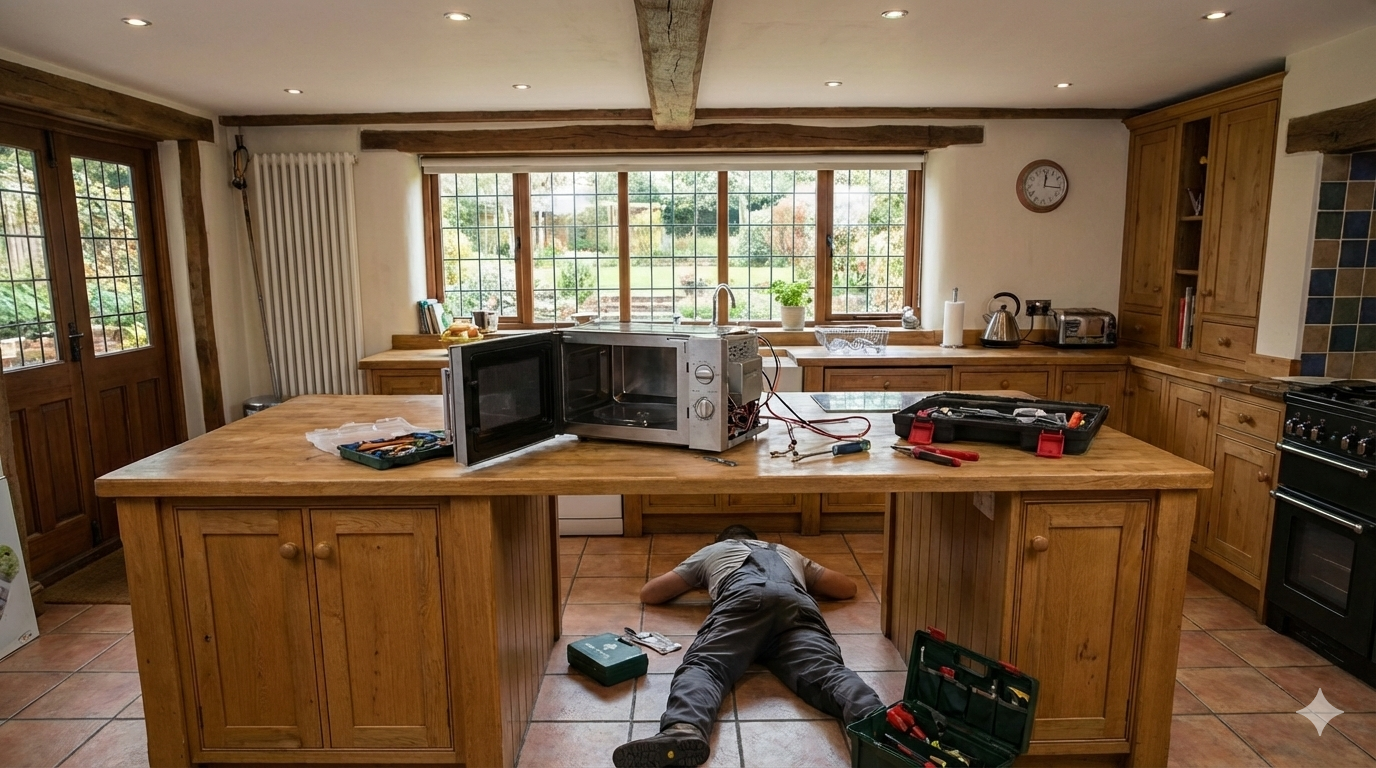
Repairing a broken microwave is rarely worth the cost or the risk. The internal capacitor can deliver a lethal shock even when unplugged, and professional repairs often cost as much as a new unit. Outside of minor turntable or light fixes, replacement is always the smarter choice.
Don't Fix Your Microwave: Why Replacement Beats Repair Every Time
TL;DR
Fixing a broken microwave is almost never worth it. The internal capacitor can hold a lethal electrical charge even when unplugged, making DIY repair genuinely dangerous. Professional repairs typically cost $300-$500, while a quality new microwave runs $80-$200. Unless it's a simple door latch or turntable issue, replace it-don't risk your safety or your wallet.
The Short Answer: Should You Repair Your Microwave?
No, in most cases you should not. Microwaves are one of the few household appliances where attempting a repair can actually kill you, thanks to a high-voltage capacitor that stores enough energy to deliver a fatal shock even after the unit is unplugged. Even if you set safety aside, the economics rarely make sense. The average professional microwave repair costs between $300 and $500 once you factor in the service call, parts, and labor-and that's approaching or exceeding the price of a brand-new unit. There are a handful of minor fixes that are safe and cheap enough to justify, but for the vast majority of microwave problems, buying a replacement is the smarter, safer move.
The Hidden Danger Inside Every Microwave
Most people think of a microwave as a simple kitchen appliance on par with a toaster or a blender. It isn't. Inside every microwave sits a high-voltage capacitor that converts your home's standard electrical current into the thousands of volts needed to power the magnetron-the component that actually generates microwaves. That capacitor can retain a charge of 2,000 volts or more, and here's the critical part: it holds that charge long after you unplug the unit.
Trained technicians discharge this capacitor with specialized tools before they touch anything inside the housing. If you open up your microwave without doing this-or without knowing how to do it safely-you're exposing yourself to a shock that can cause cardiac arrest. This isn't a scare tactic or an exaggeration. Emergency rooms see microwave-related electrical injuries every year from well-intentioned DIYers who thought they'd save a few dollars.
It's Not Like Other Appliance Repairs
If your dryer stops heating, you can safely swap out a thermal fuse with a screwdriver and a $10 part. If your dishwasher won't drain, you can usually clear the filter without any risk beyond getting your hands wet. Microwaves don't offer that kind of margin for error. The difference between a safe repair and a trip to the ER comes down to whether you properly discharged a component you may not have known existed. For most people, that risk alone should end the conversation.
The Math Doesn't Add Up
Even if you're comfortable with the safety risks-or you're hiring a professional to handle the repair-the cost equation almost always favors replacement.
What Repairs Actually Cost
A typical microwave repair breaks down like this: the service call or diagnostic fee runs $50-$100 just to have someone look at it. Common replacement parts like a magnetron ($100-$150), a control board ($80-$150), or a door switch assembly ($50-$100) add up quickly. Factor in labor and you're easily looking at $300-$500 for a single repair. Some fixes, like a dead magnetron, can push the total past $550.
What a New Microwave Actually Costs
Meanwhile, a reliable new countertop microwave from a reputable brand costs $80-$150. Mid-range models with sensor cooking and inverter technology-features that likely weren't on the unit you're thinking about repairing-run $150-$250. Even built-in over-the-range models, which are the most expensive category, start around $200-$350 and come with a full manufacturer's warranty.
The Warranty Factor
Here's something people overlook: a repaired microwave comes with, at best, a 90-day warranty on the specific part that was replaced. A new microwave comes with a one-year manufacturer's warranty covering everything. When the repair costs two to three times as much as a replacement and gives you a fraction of the warranty coverage, the decision practically makes itself.
The Few Exceptions Worth Knowing About
To be fair, not every microwave problem requires a full replacement. There are a small number of issues that are genuinely cheap and safe to fix yourself.
Turntable Problems
If your turntable stops spinning, the issue is almost always the turntable motor, the roller guide, or the coupler. These parts cost $5-$25 and sit in the cooking chamber-not behind the housing where the dangerous components live. Swapping a roller guide or coupler takes about two minutes and zero tools.
A Worn-Out Door Latch
A microwave that won't start often has a faulty door switch. The switches themselves are inexpensive (under $10), but replacing them does require opening the housing, which brings you back into capacitor territory. If you're not comfortable discharging the capacitor, this one falls into "call a pro or replace it" territory for most people.
Interior Light Bulb
Some microwaves use a standard replaceable bulb that's accessible without removing the outer housing. If that's your only issue, it's a one-minute, $3 fix. If reaching the bulb requires opening the case, it's not worth the effort or risk.
The Bottom Line on Exceptions
Notice the pattern: the safe, affordable fixes are all minor convenience issues, not functional breakdowns. If your microwave stops heating food-the one job it actually needs to do-you're almost certainly looking at a magnetron, diode, or capacitor failure, and those repairs are neither safe nor cost-effective for the average homeowner.
Choose Replacement If...
Your microwave stopped heating food entirely. This points to a magnetron, diode, or high-voltage capacitor problem-all expensive parts located in the most dangerous section of the appliance. A repair will likely cost more than a new unit.
The repair estimate exceeds 50% of a new microwave's price. This is the standard rule of thumb for appliance repair across the board, and it applies especially well to microwaves given their relatively low replacement cost.
Your microwave is more than 5-7 years old. The average microwave lifespan is about 7-10 years. Repairing a unit that's already past the midpoint of its expected life means you're paying to extend an appliance that will likely need another repair soon.
You're not trained in high-voltage electronics. This isn't a pride issue. It's a safety issue. If you don't own a multimeter and don't know how to safely discharge a capacitor, opening the housing is a genuine risk to your life.
Choose Repair If...
The turntable stopped spinning or the interior light burned out. These are the rare safe, low-cost fixes that don't require accessing the high-voltage components.
You have a premium built-in model. High-end built-in microwaves that cost $500 or more and are integrated into your cabinetry may justify a professional repair, especially if the issue is a relatively inexpensive part like a door switch. The cost and hassle of replacing a built-in unit changes the equation.
Key Takeaways
- Microwaves contain a high-voltage capacitor that can deliver a fatal shock even when the appliance is unplugged-DIY repair carries real, life-threatening risk.
- Professional microwave repairs typically cost $300-$500 once you factor in the service call, parts, and labor.
- A new, quality countertop microwave costs $80-$200 and comes with a full manufacturer's warranty, making replacement almost always the better financial decision.
- The only repairs worth attempting yourself are minor, externally accessible fixes like a broken turntable roller or an interior light bulb.
- If your microwave has stopped heating food, the underlying component failure is nearly always expensive to fix and dangerous to access-replace the unit.
- The 50% rule applies: if the repair costs more than half the price of a new microwave, replacement is the clear winner.
Microwaves are affordable, widely available, and one of the most dangerous household appliances to open up. When yours breaks down, the safest and most cost-effective move is almost always to recycle it responsibly and buy a new one.
Want to catch appliance problems early?
Get The Appliance Survival Kit — a simple system to spot issues before they become emergencies.
Learn More — $27